
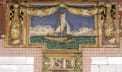
Fulton Street Station
The major line with major art running through its station...
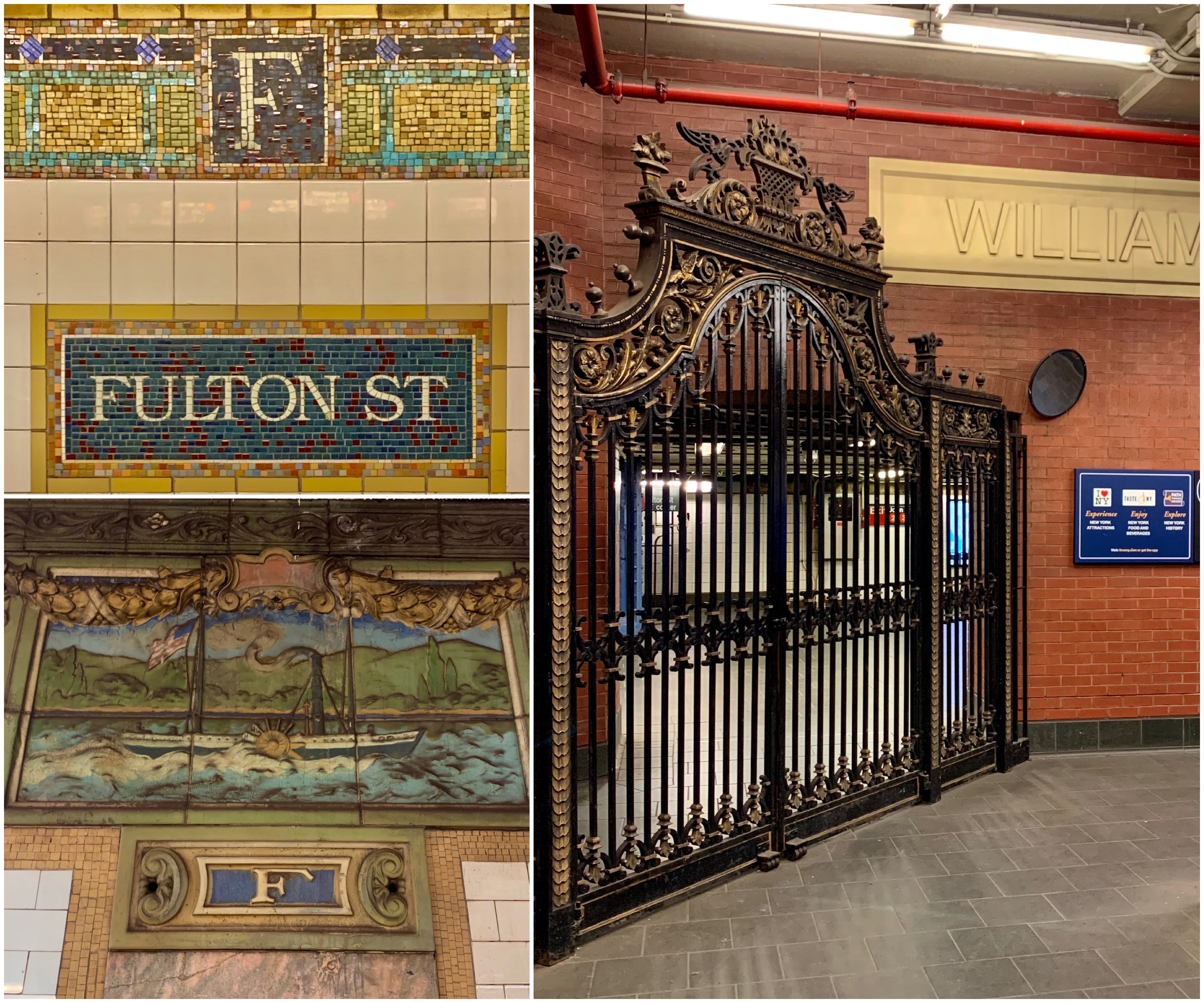
The city owes its success to the waterfront, and so the Fulton Street subway station, which became the Fulton Street Transit Center after the demise of the World Trade Center, pays homage to New York’s maritime past with Beaux Arts murals and Arts and Crafts mosaics. Named after Robert Fulton, the inventor of the steamboat, the Fulton Street station includes bas reliefs of the many boats that circulated around New York Harbor.
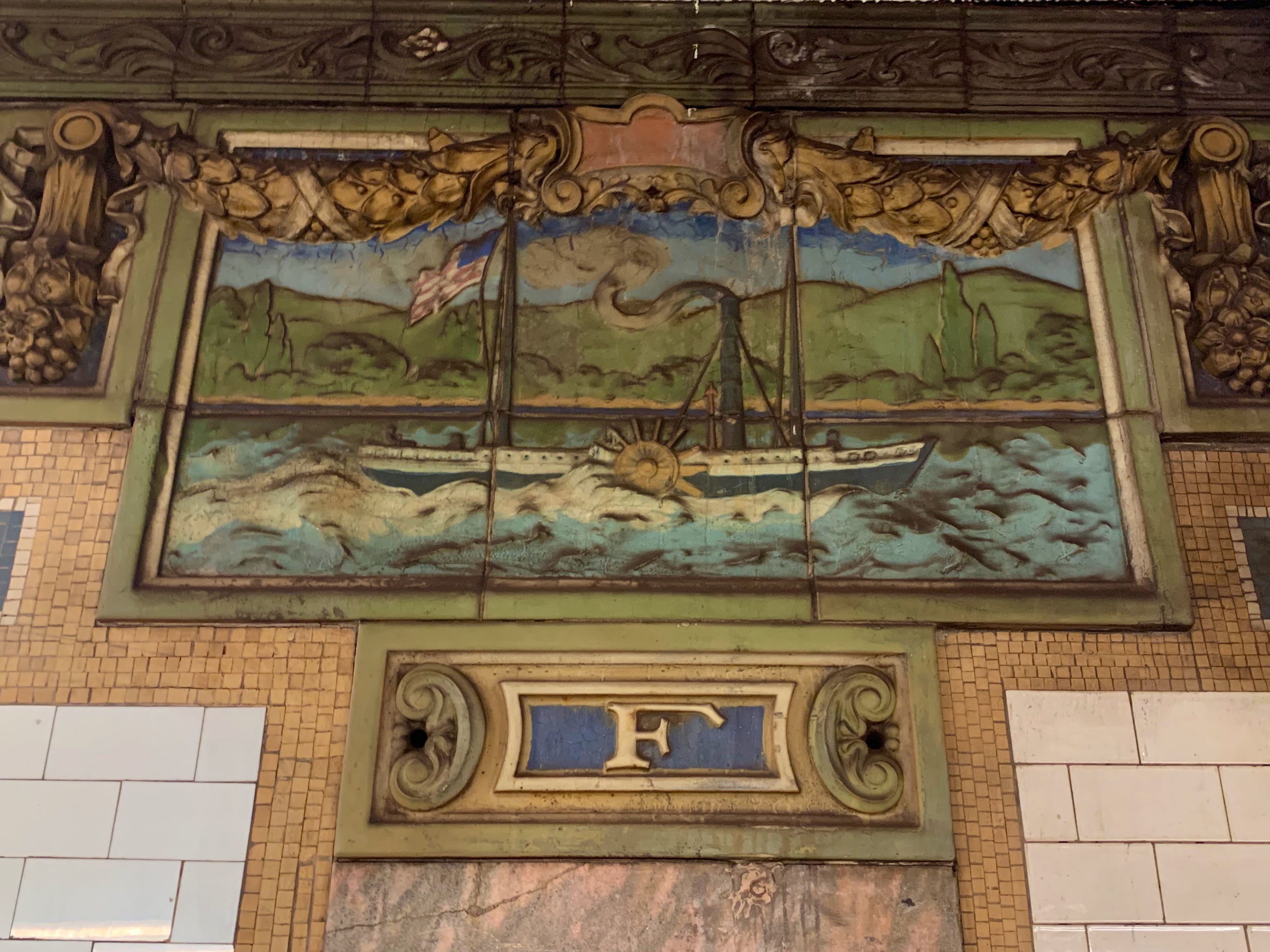
From its very beginning, the subway was intended to be sophisticated — to celebrate and encourage the image of a thriving cosmopolitan center. In the initial planning of the MTA, the city insisted on hiring artists to elevate the subway experience by embellishing the underground walls with fanciful tile-work and mosaics. Originally designed by Heins & Lafarge, the Fulton Street subway station’s restoration brought back to life their ornate terra-cotta panels.
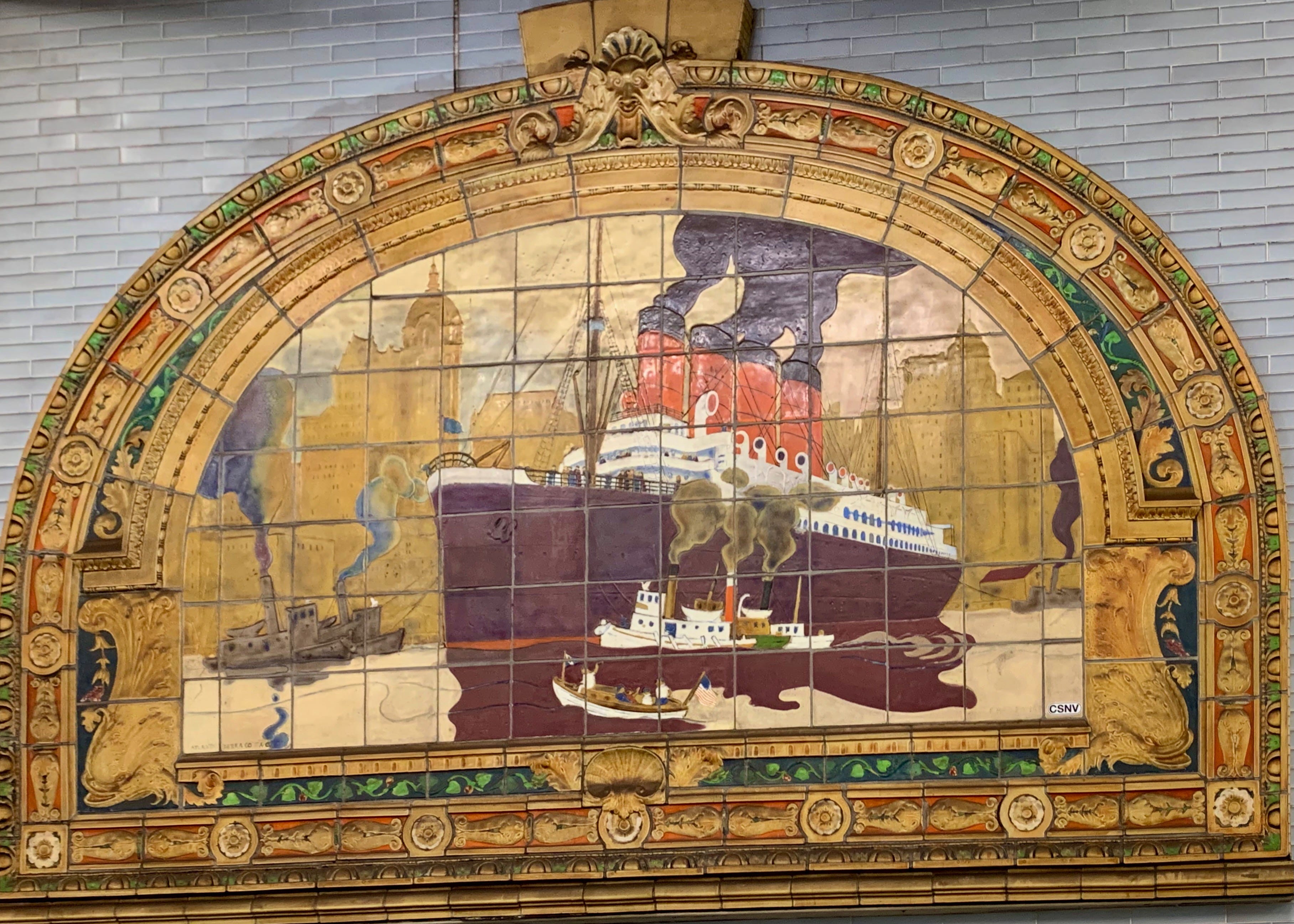
The station also includes the original Marine Grill Murals, created by artist Fred Dana Marsh in 1913. Marsh drew and painted New York during a period when its harbor was bustling with commerce, when it truly was a major port city. One subject that he returned to repeatedly over the course of his career was ships and boats on the water. “I was impressed by the sight of brawny workmen swinging out on girders and riveting the lacy skeletons of the earliest skyscrapers on lower Manhattan,” Marsh is known to have said.
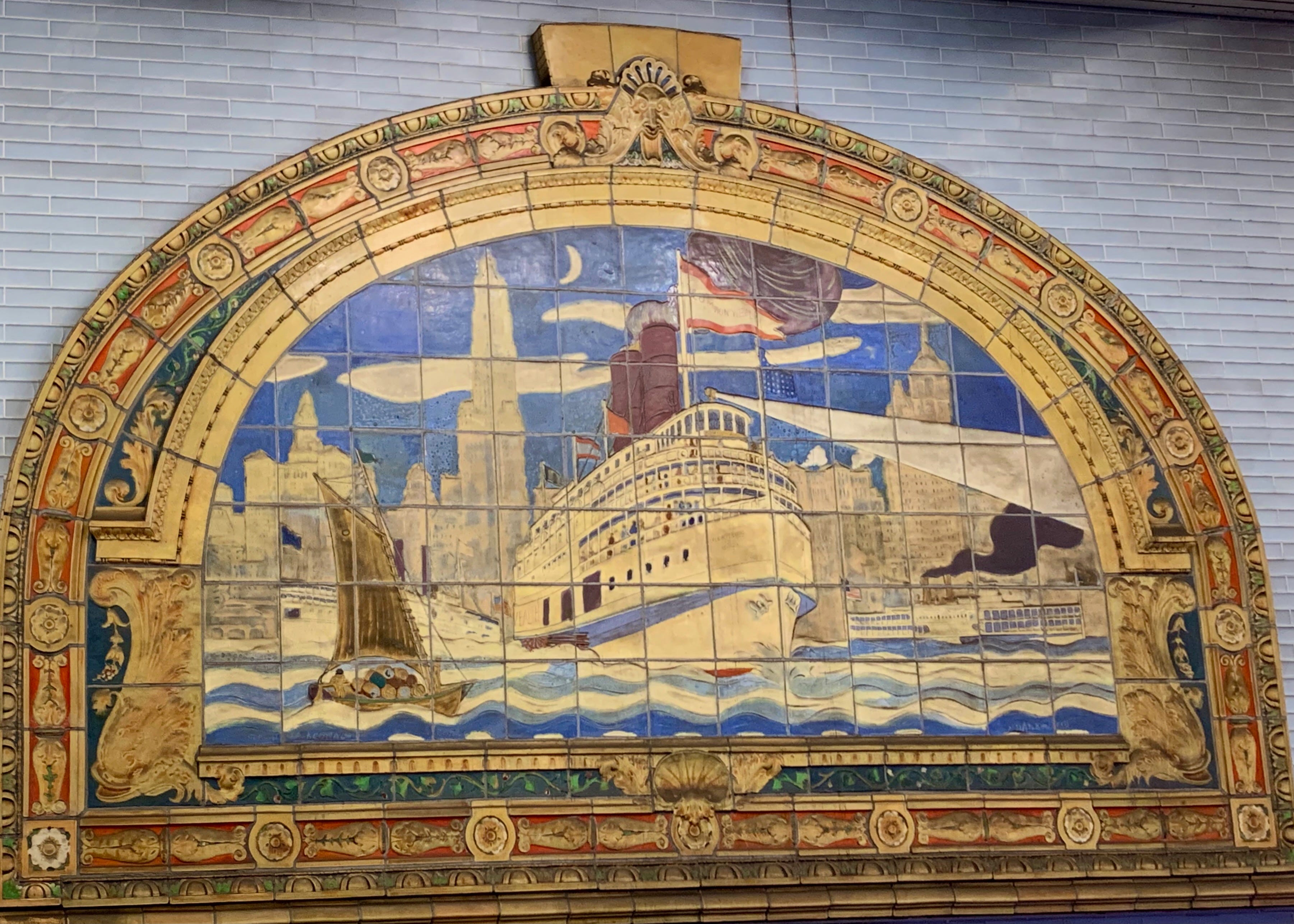
Hidden away at the William Street entrance to the Fulton Street station are a collection of Marsh’s terracotta tile murals. They once enlivened the walls of a restaurant originally called the Rathskeller, but once the murals were finished, their beauty inspired the name change to the Marine Grill. It was a grand restaurant located in the world’s largest and one of the most luxurious hotels, the McAlpin, at 34th Street and Broadway.
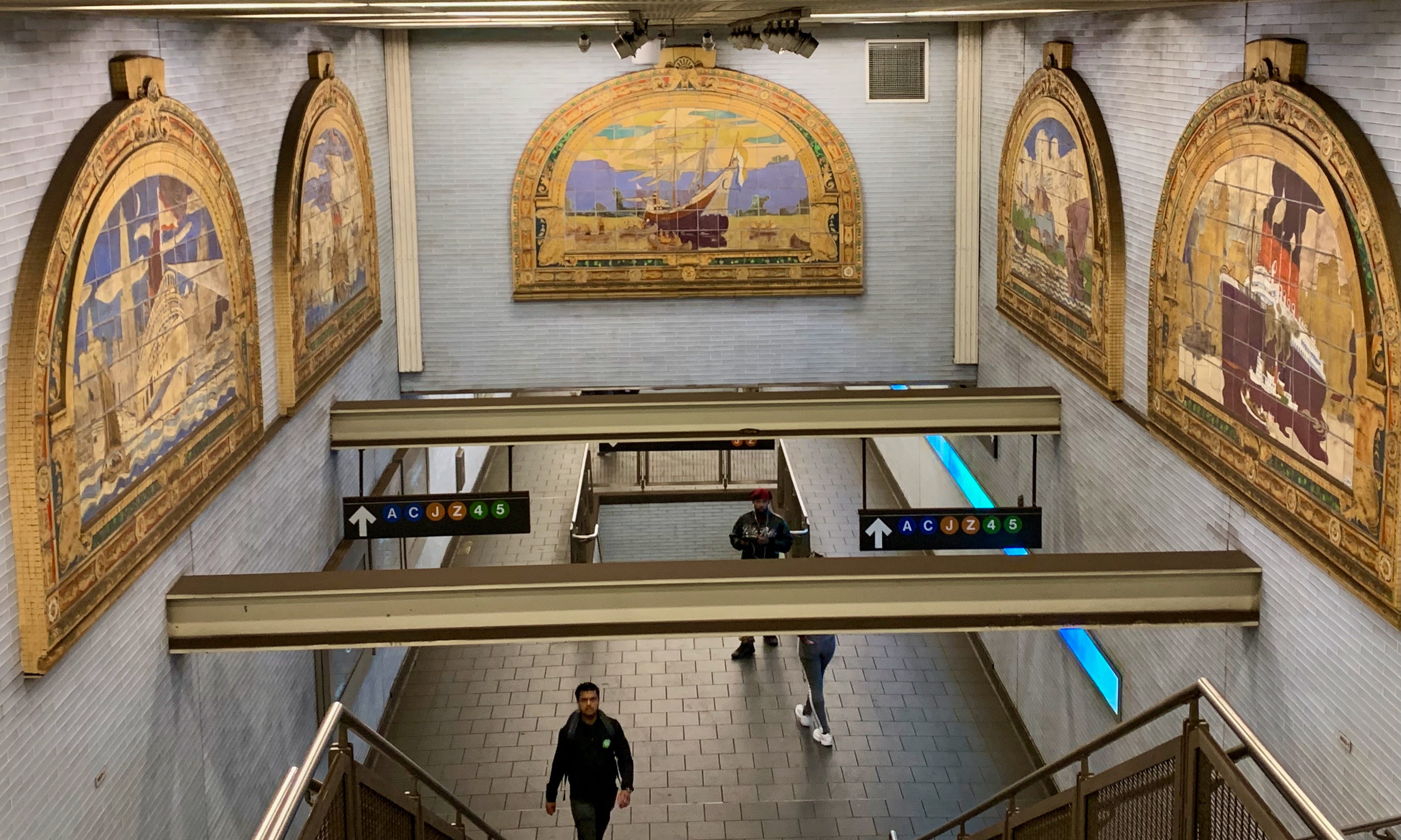
The Rathskeller (from German-speaking countries for a bar or restaurant located in the basement of a city hall, Rathaus) was noted for its forest of archways and columns, completely clad in ceramic tile in an array of shades of terracotta, brown, gold, red and green. But once Marsh designed the six terracotta lunette-shaped murals, they covered the walls of the restaurant. Telling the story of New York City’s maritime history, the elaborate murals featured boats, canoes, tugs, ships, steamers, and ocean liners over a 300-year period. The space was an architectural masterpiece; the murals served as focal points around the restaurant. “It is my object then to depict the noble side of modern industry, to emulate the efforts of the real workers, the investors, the engineers, the electricians, the great army of toilers – to express in ‘lofty allegory’ the drama of modern life,” Marsh said.
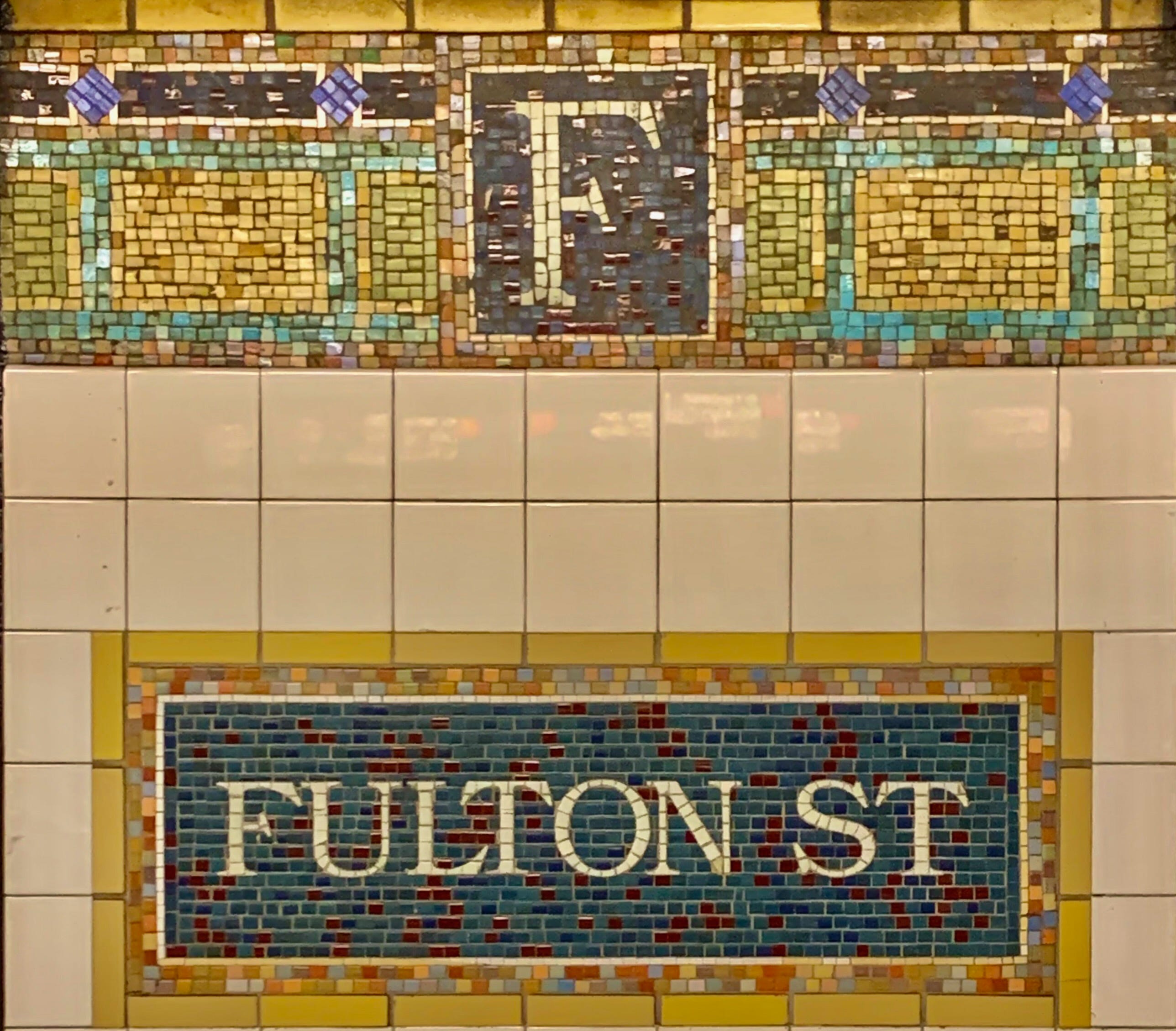
Manufactured by the Atlantic Terra Cotta Company of Staten Island, one of the companies that produced the terracotta tiles for subway stations in the early 20th century, the murals helped to make the Grill Room the fashionable meeting place for Herald Square shoppers lunching, a late-night rendezvous, or an elegant dinner. Other original signage were primarily intended to provide an indication of the station at which they were located. However, the elaborate tile-workings were not just decorative: the unique colors and patterns within all of the different station signs were also supposed to help non-English speakers identify their stops without having to decipher the foreign language.
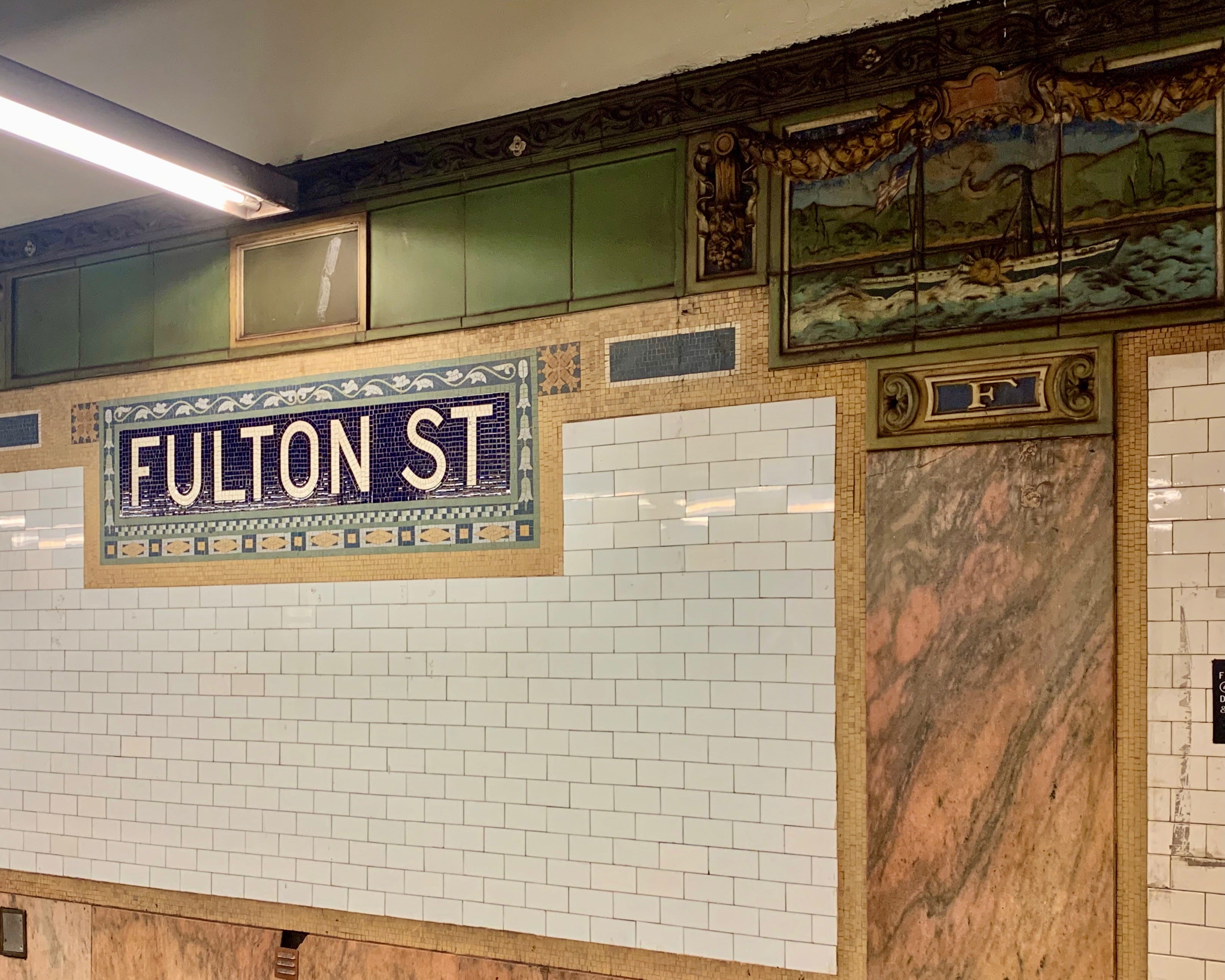
Well past its glory days, the McAlpin Hotel was converted to cooperative apartments in 1989; the Marine Grill was demolished, and the glorious tile murals were packed into dumpsters, headed for landfill. The obscure, non-profit organization Friends of Terra Cotta, saw the disassembled murals in the dumpsters, and brought them to the attention of the New York Landmarks Preservation Committee. The tiles were rescued from outside the former hotel’s construction site. The MTA’s Arts and Design department restored the murals, and college art students, as part of an intern program, painstakingly reassembled the pieces as if they were giant jigsaw puzzles. The murals were installed in a corridor at floor-level height at the Fulton Street and Broadway subway station in 2000.
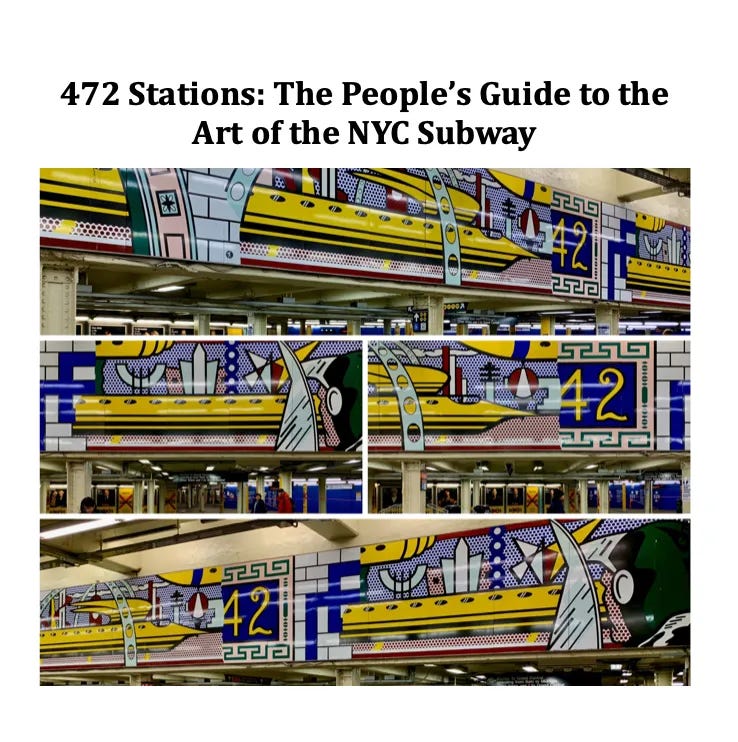
A Guide to the art of all 472 stations of the New York City subway:
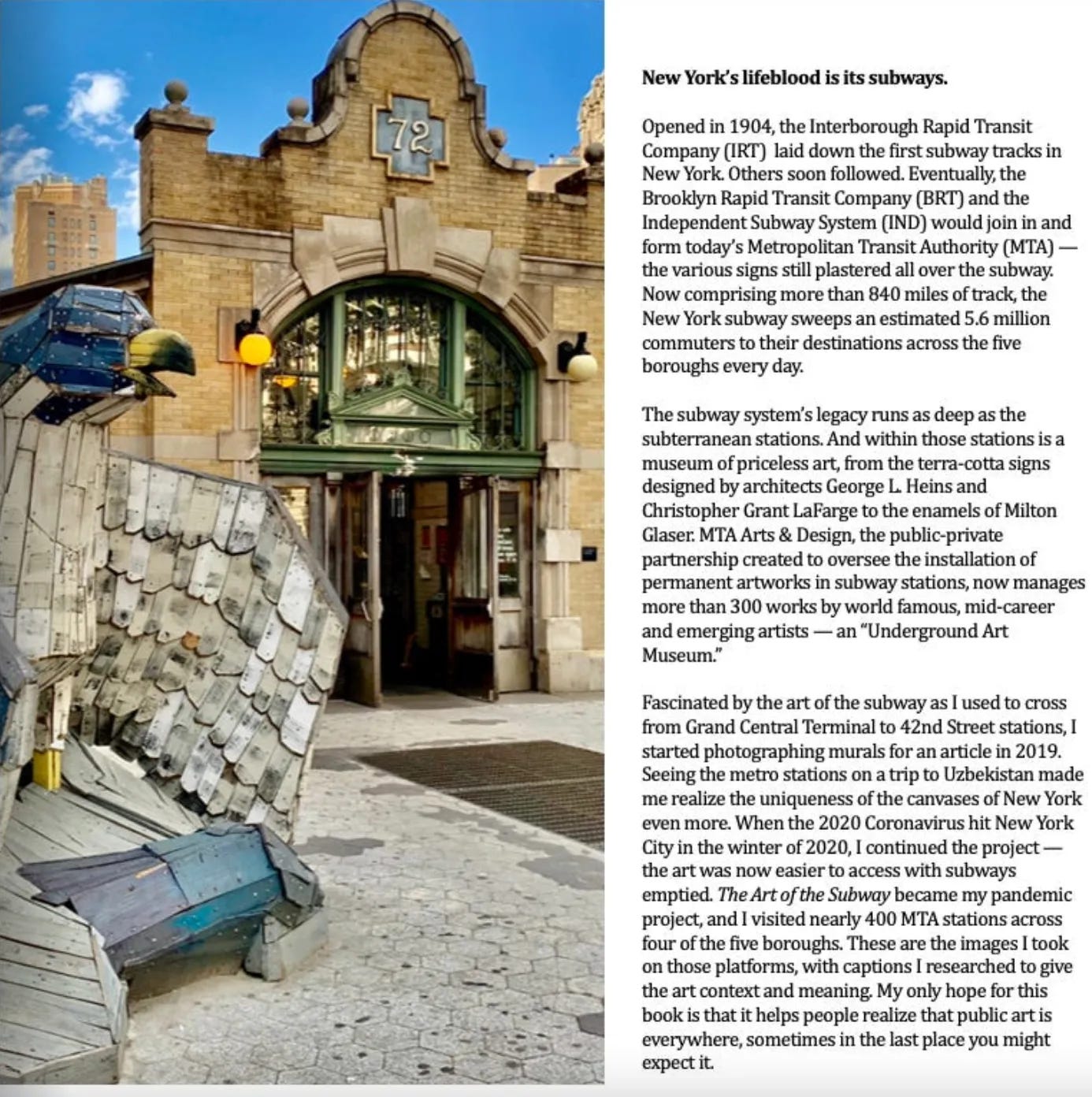
From 2018 through 2021, I stopped off at 400+ stations of the New York City subway, took photographs of the public art there and researched the origin of the art, first for Instagram, then for Substack, for a 2023 Spectator article and now, hopefully, for a guidebook. A proof-of-concept book proposal 472 Stations: The People’s Guide to the Art of the New York City Subway is available.
I love the stories of their history. Thank god 5 were saved before being destroyed.
It took Jackie O's intervention in the early 90s to save the train station (Union or Grand Central?) set for demolition before she died in 94.